

 Image Source
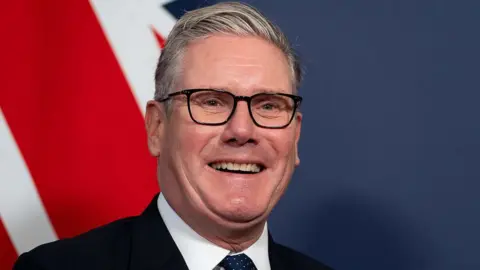
The Leader's remarkably clear shift on the UK's after-Brexit connections to the bloc on Saturday was designed to signal to the business community, to Brussels, and to fellow EU nations, alongside his party members.
An Altered Framework for Relations
Stronger after-Brexit commercial ties are projected to be examined as within an annual process of government-to-government discussions instead of solely at the ongoing formal review of the trade and cooperation agreement.
This constituted the official answer to political questions regarding a wider-ranging renegotiation of relations that involved returning to the common tariff area.
Internal Pressure
Several MPs, union leaders and government figures have added their voices to suggestions crystallised by a vote last year that resulted in a non-binding vote.
"It is better prioritising the European single market rather than the customs union for our future cooperation," the Prime Minister said.
He stated unequivocally that re-entering the tariff union was a lower priority, as it goes against what he regards as one of the successes of the previous year: the securing of high-quality agreements with the America and India, with additional expected in the Gulf region.
Emphasising the Internal Market
Instead of the customs union, his emphasis is on building a "stronger bond" with the EU's single market, which would not mean abandoning those international pacts globally.
When the UK officially exited the EU in January 2021, the negotiated settlement stressed freedom from EU rules over barrier-free exports for British exporters in EU nations.
The ongoing recalibration proposes realigning with EU standards in several sectors to help the easier passage of trade: agri-food goods, electricity, and emissions trading.
Business Calls
A leading commercial body last month published a comprehensive series of new proposals in different fields to help exporters deal with new bureaucratic hurdles that has hit the export of products.
Its own survey found that a significant number of business members felt that the current arrangement was impeding commercial success.
A range of additional sectors could, realistically, see a parallel method – convergence with single market rules – in return for minimising post-Brexit barriers across manufacturing, in the car industry, chemicals, or for example in value-added tax systems.
Continental Reaction
Member states were unimpressed by the modest aims in earlier discussions, particularly the London's refusal of ideas advanced by some commentators regarding the effective return of British exports to the single market.
The precise arrangements on electricity and agricultural regulations is yet to be agreed. A plan for UK manufacturers to be participate in a €150bn security initiative has hit a snag over the cost of the membership fee, after some objections from the French government. Another nation has signed up to the initiative.
Broader Context
The UK has agreed a deal to return to a university exchange programme and to continue talks on a youth mobility program. This has facilitated progress for further UK-EU talks.
Some UK insiders suggest that the release last month of a Washington policy paper has shifted the environment on UK European policy.
The strategy stated that the US would "encourage pushback" to Europe's current trajectory and praised the "increasing clout" of nationalist groups.
Among officials, there is some recognition that the international situation has evolved further.
Domestic Pressures
At home, the leadership also expects being challenged on European policy not just one opposition party, but additionally others, which is focusing on its key electoral areas in local votes.
The Premier's latest comments are borne of a intersection of economics, electoral strategy and global dynamics as the UK enters a year that will commemorate the ten-year mark of the landmark EU vote.


